Meet the Portuguese team
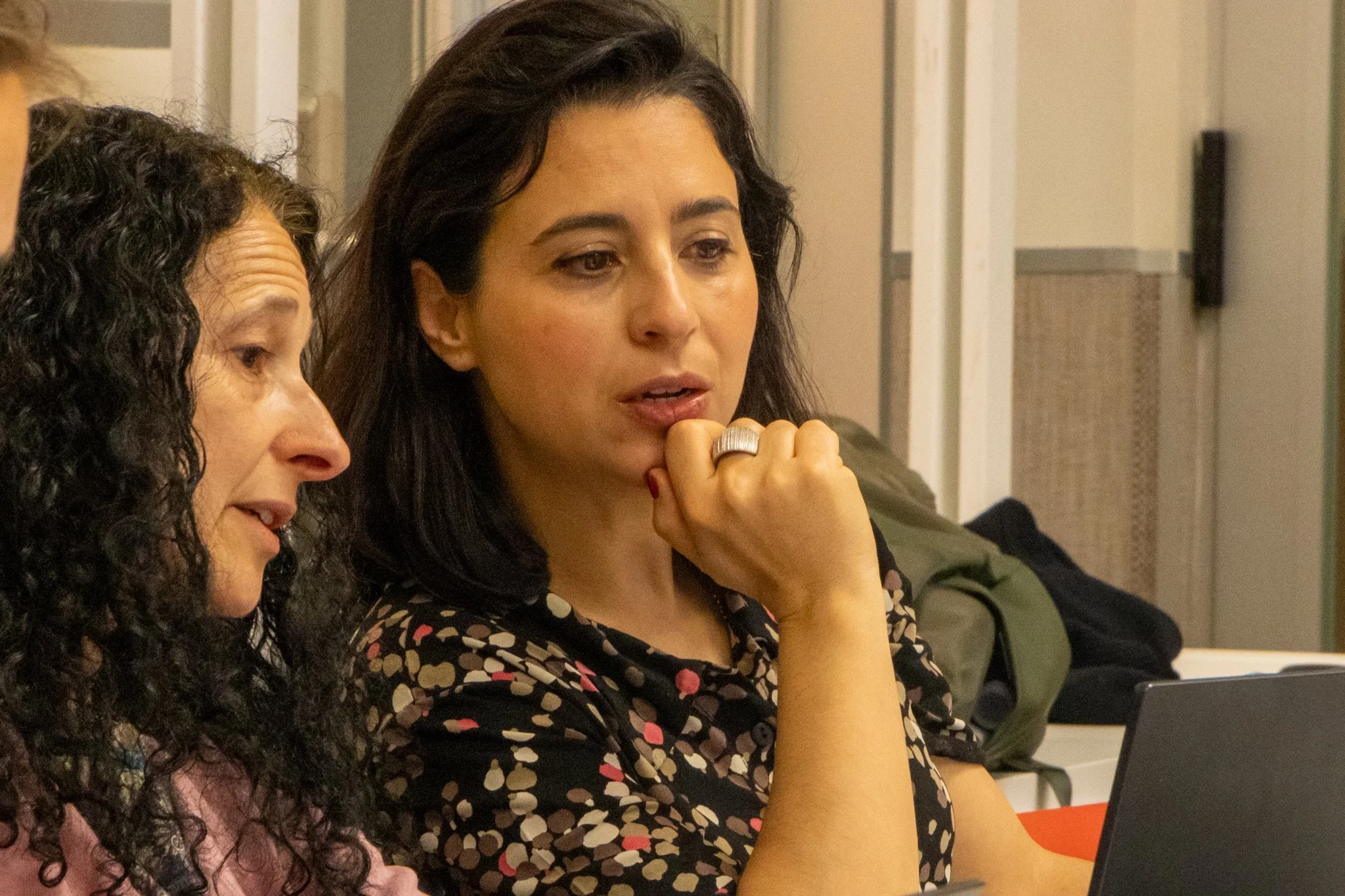
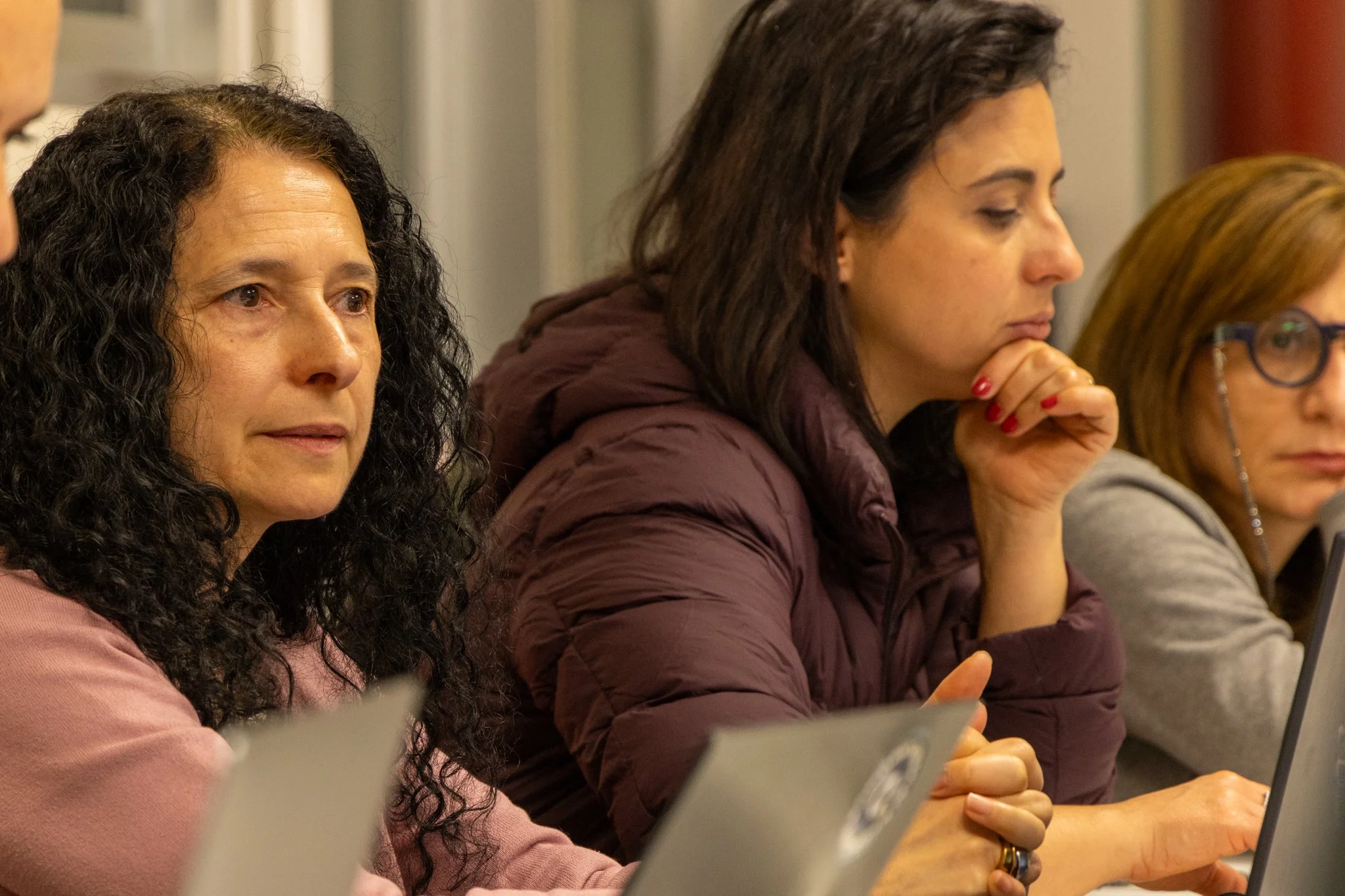
Professor Maria Raquel Freire introduces the Portuguese team based at the Centre for Social Studies, University of Coimbra and gives an update on the team’s research.
Who is in the research team?
· Maria Raquel Freire (PI) – European studies, foreign policy, security issues, engaged with discourse analysis and mediatization
· Sofia José Santos – media, power and counterpower, political communication, technopolitics, marginalised groups, critical discourse analysis
· Ines Amaral - social media, social networks, discourse analysis, far-right movements
· Moara Assis Crivelente – post-doc, grassroots movements, self-determination
· Beatriz Rodrigues – master’s student, human rights and grassroots movements
The team combines international relations and political science, and media studies competencies. We are experienced in conducting interviews, quantitative and qualitative discourse analysis, critical discourse analysis, and focus group interviews.
What movements are your team researching and why?
We are looking at two contrasting movements that together help understand the contemporary landscape of political mobilisation in Portugal: Vida Justa (Just Life Movement) and Chega (Enough).
Rather than applying the project's default framework of "pro-democratic" and "anti-democratic," we adopted the categories of progressive and reactionary mobilisations, as we understand these better capture the nature and complexity of the cases under study.
Vida Justa is a grassroots movement that emerged in early 2023 as a collective response to deepening socioeconomic disparities, with a particular focus on housing precarity, wage inequality, and structural racism affecting Lisbon's urban peripheries. Its origins lie in solidarity networks formed during the COVID-19 pandemic, and it was formally launched with a bilingual demonstration in Creole and Portuguese: "Nu sta djuntu, nu sta forti / Estamos juntos, estamos fortes" ("We are together, we are strong").
The choice of Creole is politically deliberate, signalling the movement's commitment to representing immigrant and Afro-descendant communities that have historically been excluded from mainstream politics. It is a progressive force that exercises political agency, deepens socio-political consciousness, and advocates for the empowerment of working-class and marginalised communities.
Chega is a far-right political party that grew from a single parliamentary seat in 2019 to 58 seats, becoming Portugal's second-largest political force by 2025. It maintains close associations with far-right social movements domestically (pro-Vida, Habeas Corpus, 1145) and internationally through the European Parliament.
It has been instrumental in organising protest actions around immigration and what the party describes as "gender ideology," mobilising opposition to social and political gains achieved in recent decades. It is a reactionary force that reinforces exclusionary national imaginaries.
The rationale for examining these two cases is analytical: they both emerge from dissatisfaction with established political arrangements and claim to represent constituencies excluded from meaningful representation — yet they view Portugal's crisis in fundamentally opposed ways, mobilise different constituencies, and pursue incompatible political visions. The comparison allows us to analyse how progressive and reactionary forms of political contestation co-exist within contemporary Portuguese democracy.
What has surprised you the most during the research?
Still at an early stage, maybe not focusing so much on the surprising factors, and more on where we might contribute to relevant lines of research:
The first concerns the construction of political identities across progressive and reactionary movements. The contrast between Vida Justa's intersectional, anti-racist, and inclusive framing and Chega's nationalist, exclusionary rhetoric shows how different political identities are constructed from what interviewees on both sides describe as shared underlying grievances— such as institutional failure, elite detachment, and economic insecurity. The research can contribute to broader comparative debates about why the same crisis context produces such divergent political responses.
A second contribution focuses on repertoires of action and their political logics. The two cases offer rich comparative material on how different movements deploy their repertoires. Vida Justa combines neighbourhood assemblies, emergency solidarity, legal support, cultural expression, and public demonstrations — all subordinated to the principle of community empowerment. Chega prioritises digital communication (achieving engagement metrics that "dramatically exceed" established parties), electoral campaigning, and the construction of parallel institutional infrastructure. The research can address what these different repertoires reveal about each movement's theory of change and its relationship to established institutions.
And finally, on the dynamics of repression and response. The research shows how Vida Justa frames repression not through overt confrontation but through a discourse of institutional indifference, procedural obstruction, and unequal access to power — while Chega strategically deploys narratives of persecution to reinforce internal cohesion and position itself as an anti-establishment force. These contrasting responses to perceived repression show broader questions about how movements legitimate their continued mobilisation. Which we see as a most relevant contribution.
So we are very much looking forward to progress with the research.